🚚
Use code
FLAT10
to get AED 10 OFF
on orders above AED 250.
🚚
Use code
FLAT10
to get AED 10 OFF
on orders above AED 250.
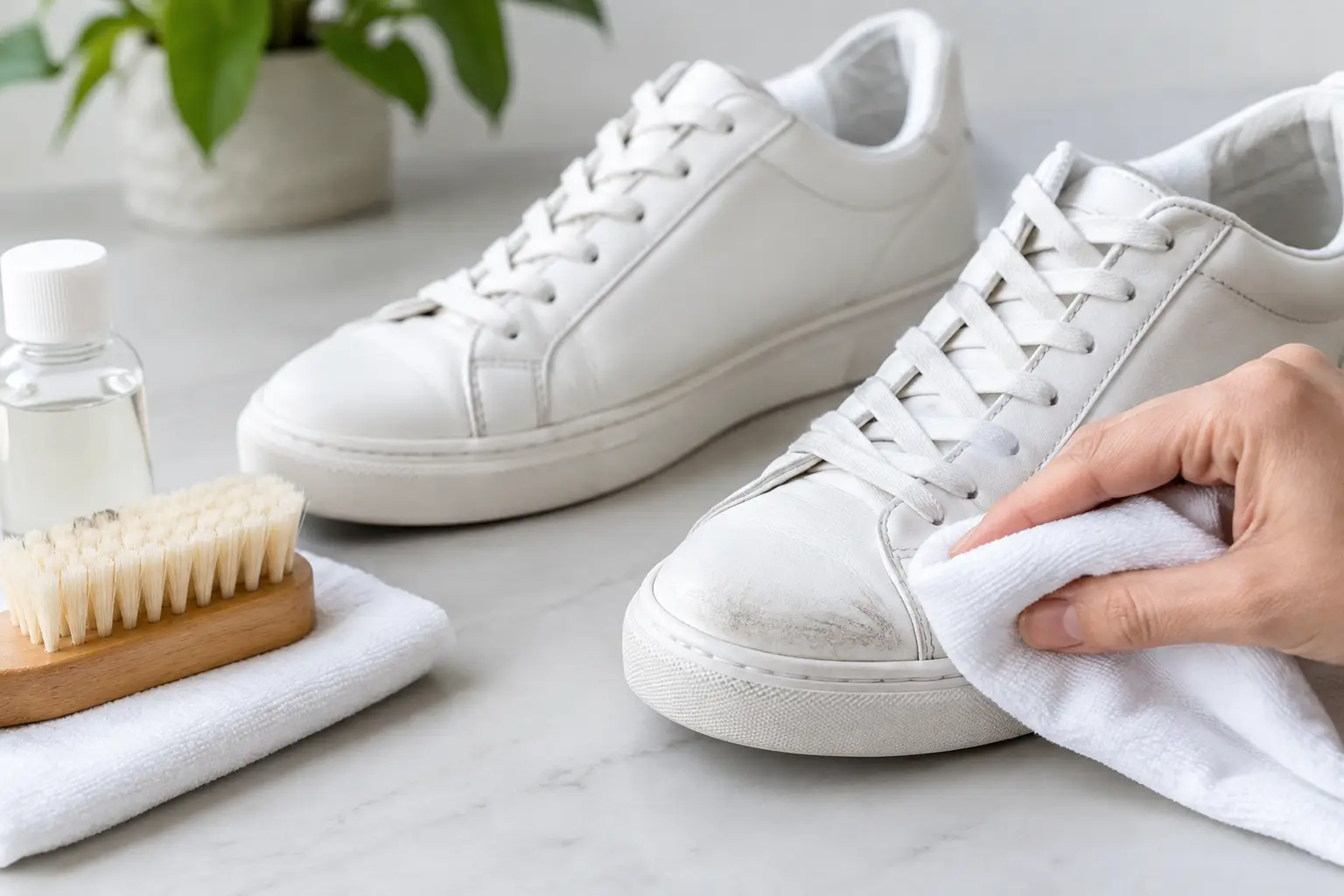
That gray or black mark on a clean white pair can make the whole sneaker look tired, even when the leather is still in great shape. The good news: you can remove scuffs from leather sneakers without turning a quick touch-up into a faded, dry-looking patch. The key is treating the mark, not attacking the entire shoe with whatever cleaner happens to be under the sink.
Leather sneakers need a lighter hand than canvas or rubber. A scuff may be surface transfer from a curb, a chair leg, or another shoe. Or it may be actual damage to the leather finish. Those are two different problems, and knowing which one you have saves your kicks.
Run a clean finger lightly across the mark. If it feels smooth and sits on top of the leather, it is probably color transfer or surface grime. This is the easiest kind to clean. If the area feels rough, cracked, or lighter than the surrounding leather, the protective finish may have been scraped away. Cleaning can improve it, but it cannot fully replace missing color.
Also look at the material. Smooth coated leather is common on everyday lifestyle sneakers and usually responds well to a sneaker-safe cleaning solution. Tumbled leather has a more textured grain, so residue can settle in the creases. Suede, nubuck, and unfinished leather are not handled the same way – keep moisture and standard leather cleaners away from those materials unless the product specifically says it is safe for them.
Before you start, remove loose dust with a dry microfiber cloth or a soft sneaker brush. Rubbing a scuff while dust is still on the shoe can create tiny scratches and dull the finish around it.
Start with the mildest method and only move up if the mark remains. This protects the leather’s top coat and keeps the color even.
Put a small amount of sneaker cleaner on a microfiber cloth or soft brush, not directly onto the leather. Work over the scuff using small circles and very light pressure. You are lifting transfer from the surface, not sanding the mark away.
Wipe the area with a second clean, slightly damp cloth, then dry it immediately with a towel. Let the sneaker air-dry indoors. Direct sun, a hair dryer, or leaving your pair in a hot car can dry out leather and cause the finish to look uneven.
A purpose-built cleaning kit is the smarter move for regular care because it gives you the right formula and brush softness in one setup. Sneakkool’s sneaker-care approach is built around this idea: keep the cleaning process controlled, so your collection stays fresh without trial-and-error household hacks.
For a fresh, faint scuff, plain water may be enough. Dampen, do not soak, a microfiber cloth and gently buff the area. This works especially well when the mark is rubber transfer from an escalator edge, a car door, or another sole.
Check your cloth as you work. If you see the dark mark transferring onto it, you are making progress. Rotate to a clean section of the cloth so you do not rub the lifted grime back onto the shoe.
Scuffs near stitching, perforations, logos, or the edge of a leather panel can hold dirt where a cloth cannot reach. Use a soft-bristle brush with a small amount of cleaner. Keep the brush moving gently, then wipe away foam before it dries in the texture.
Avoid stiff utility brushes. They may be useful for dirty outsoles, but they are too aggressive for finished leather. One heavy-handed scrub can leave a shiny or scratched spot that is more obvious than the original scuff.
A mark on the white rubber edge can make it look as though the leather itself is damaged. Clean the midsole with a dedicated brush or cloth before judging the upper. Keep stronger sole-cleaning products away from the leather panel above it, particularly on white sneakers where discoloration shows fast.
Use controlled movements along the seam between the sole and upper. A cloth wrapped around your fingertip gives you more accuracy than flooding the area with cleaner.
The internet is full of quick fixes, but some popular methods trade a temporary clean look for long-term damage. Household bleach can strip color and weaken stitching. Nail polish remover and acetone can dissolve the finish. Harsh alcohol products may leave leather dry, sticky, or patchy.
Magic erasers are another mixed bag. They can lift stubborn transfer from rubber, but their abrasive texture can dull coated leather and remove paint. If you use one at all, reserve it for a small rubber area, use almost no pressure, and keep it away from the upper.
Toothpaste, baking soda, dish soap, and random cleaning sprays are also risky because formulas vary. A product that works on one pair may leave residue, change the sheen, or pull color from another. Your sneaker game deserves more than a gamble with kitchen supplies.
If the scuff is actually a scrape through the leather coating, cleaner will remove dirt but leave the damaged spot visible. You may notice a pale line on dark leather or a darker exposed area on white leather. At that point, the solution is restoration, not deeper cleaning.
For small finish loss, use a color-matched leather touch-up product designed for footwear and test it somewhere hidden first. Apply thin layers and let each layer dry fully. Thick applications can crack, look glossy, or create a hard-edged patch.
For premium pairs, vintage leather, or a large scrape across a toe box, professional restoration is often the better call. It costs more than a home fix, but a skilled color match is worth it when the pair has real collector value. If the shoe is a daily beater, a careful clean and a little character may be the more practical choice.
Most scuffs happen during ordinary wear, not because you are careless. Crowded malls, driving, travel, gym lockers, and sneaker piles by the door all create opportunities for leather to rub against rough surfaces. A few small habits make a visible difference.
Wipe your sneakers down after wear instead of waiting for a full cleaning day. Fresh transfer lifts much more easily than a mark that has sat for weeks. Use shoe trees or clean paper to help pairs keep their shape while drying, especially after a deeper clean. A collapsed toe box creases more easily and makes scuffed areas harder to restore evenly.
Storage matters too. Do not stack sneakers loose in a closet, where soles and hardware can scrape the leather of the pair beside them. A sturdy, crystal-clear display box keeps dust off, prevents accidental contact, and lets your best pairs stay part of the room instead of disappearing into a pile. For travel, use a sneaker bag that separates your kicks from clothing, luggage wheels, and loose toiletries.
White leather makes every mark look louder, so quick maintenance beats occasional aggressive cleaning. After a normal wear, brush away dust, wipe the upper with a dry microfiber cloth, and spot-clean any visible transfer. Once the pair is dry, store it with the laces loosened and the shape supported.
For a deeper clean, take out the laces, clean the upper and sole as separate materials, and let everything dry completely before putting the pair back in storage. Never seal a damp sneaker inside a display box or travel bag. Trapped moisture can create odor and encourage discoloration.
A clean pair is not just about looking sharp when you step out. It protects the material, keeps your collection presentation-ready, and means the next scuff is a quick fix instead of a full restoration project. Treat leather with patience, use sneaker-specific tools, and your favorite kicks will keep their clean look far longer.
No account yet?
Create an Account