🚚
Use code
FLAT10
to get AED 10 OFF
on orders above AED 250.
🚚
Use code
FLAT10
to get AED 10 OFF
on orders above AED 250.
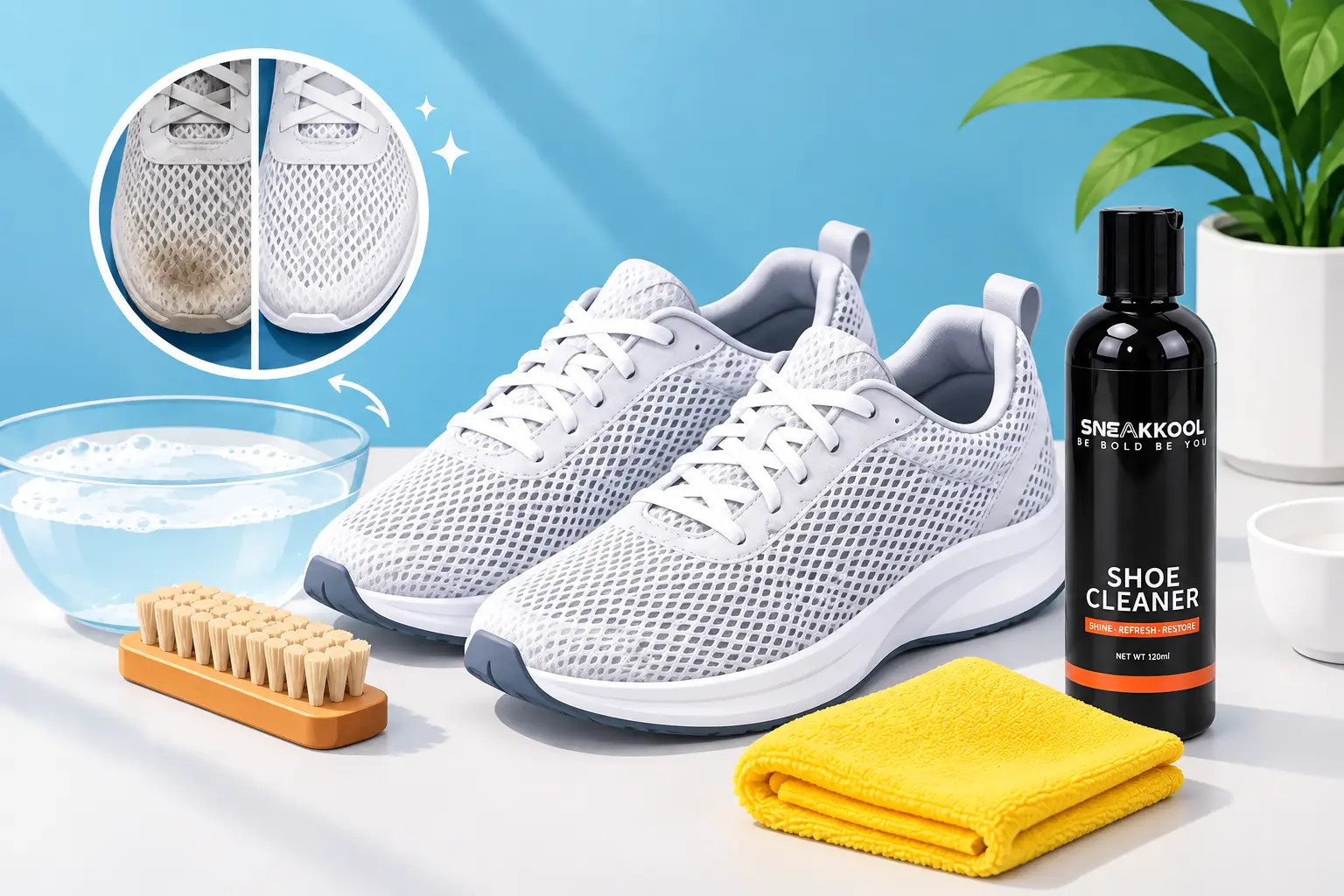
Mesh sneakers look light, breathable, and sharp right up until dust settles into the weave or one coffee splash leaves a dark spot across the toe box. Knowing how to clean mesh sneakers properly makes the difference between bringing your kicks back to life and leaving them with water rings, flattened fibers, or yellowed glue.
Mesh needs a gentler approach than leather or rubber. The tiny openings that make it comfortable also trap dirt below the surface, while aggressive scrubbing can push stains deeper or roughen the fabric. The goal is not to soak the shoe. It is to lift dirt gradually, control moisture, and let the pair dry in the right shape.
Most mesh uppers are made from tightly woven synthetic fibers, though performance runners may combine engineered mesh with knit panels, foam padding, suede overlays, or heat-bonded details. That mix matters. A cleaner safe for one panel may be too harsh for another, especially around colored overlays and glued seams.
The biggest mistake is treating mesh like a canvas shoe. Saturating it with water can carry grime outward and create tide marks as it dries. It can also weaken adhesives over time, cause color bleeding, and leave a damp odor inside the sneaker. In humid weather, that slow drying process is even less forgiving.
A sneaker-specific cleaning solution, soft brush, and microfiber cloth give you much more control than laundry detergent and an old toothbrush. Household products can work in a pinch, but they are harder to dose and may leave residue that attracts more dirt after your next wear.
Set up on a clean towel or work surface so loose dirt does not transfer back onto the shoes. For a proper clean, gather these essentials:
Take out the laces and insoles first. Laces are easier to clean separately, and removing them gives you access to the tongue and the eyelet area, where sweat and dust tend to build up. If the insoles are only lightly dusty, wipe them with a barely damp cloth instead of soaking them.
Before applying cleaner, test a small, hidden spot near the heel collar. This is especially smart for bright colorways, vintage pairs, and shoes with a mix of mesh and suede. If the color transfers to your cloth or brush, use less solution and less water.
Start with a completely dry shoe and brush away loose dust, sand, and surface debris. Use light strokes in different directions, especially across the toe box, sidewalls, and tongue. Do not press hard. Mesh can snag or pill when a stiff brush catches the fibers.
This dry step is not optional if your sneakers have been worn outside. Adding water before removing loose dirt turns fine dust into muddy residue that settles deeper into the material.
Dip a medium brush into your cleaning solution, then tap off excess liquid. Work the rubber midsole and outsole in small sections. This lets you handle scuffs and packed-in dirt without dragging grime from the sole onto the mesh.
Wipe away the loosened foam with a microfiber cloth. If the white midsole still looks dull, repeat once rather than scrubbing aggressively. Patience keeps the finish clean and avoids unnecessary abrasion.
For the upper, switch to a soft brush. Add a few drops of cleaning solution to the brush and lightly dampen the bristles with lukewarm water. The brush should feel damp, not dripping.
Work one small panel at a time using gentle circular motions. Start at the least visible area so you can see how the material reacts. Focus on lifting the stain rather than flooding it. On a knit or open mesh panel, brush in the direction of the weave whenever possible.
After a few passes, blot the area immediately with a clean microfiber cloth. Blotting pulls dirty moisture out of the mesh before it spreads. Avoid rubbing with the cloth, since friction can make delicate fibers look fuzzy.
For a dried mud mark or food stain, do not reach for bleach, acetone, or harsh stain removers. Those can discolor the upper, damage printed details, and affect surrounding glue.
Instead, use a small amount of sneaker cleaner on the soft brush, work the spot gently, then blot. Repeat the process two or three times if needed, allowing a minute between passes. A stain that does not fully disappear may be set into the fibers, and over-cleaning can make the surrounding panel look worse than the mark itself.
Oil is the exception that often needs professional-level care. If you are dealing with a fresh oil stain, blot it immediately with a dry cloth and avoid adding lots of water. Water can spread oil through the mesh. For expensive or limited pairs, it is usually better to stop than experiment with strong chemicals.
Place laces in a small bowl with lukewarm water and a little cleaning solution. Gently massage them between your fingers, rinse lightly, and press them in a towel to remove excess water. Never twist them hard, as this can stretch the fibers.
Wipe insoles with a damp cloth and let them air dry outside the shoe. If odor is the issue, make sure the entire sneaker is completely dry before wearing it again. Covering odor with fragrance while moisture remains inside only delays the problem.
Drying is where a good cleaning job can go wrong. Stuff the sneakers loosely with white paper or use shoe trees to support the toe box and absorb moisture from inside. White paper is safer than newspaper, which can transfer ink when damp.
Leave the shoes in a well-ventilated indoor area, away from direct sun, radiators, hair dryers, and clothes dryers. High heat can warp foam, harden glue, shrink certain synthetic materials, and cause white or light-colored mesh to yellow. Give the pair time. Depending on how much moisture was used, mesh sneakers may need 12 to 24 hours to dry fully.
Do not put mesh sneakers in a washing machine unless the manufacturer specifically says it is safe. The spinning action can distort the upper, loosen glued components, and damage the shoe’s structure. A careful hand clean gives better results and more control.
The easiest way to preserve a clean pair is to stop grime from becoming a deep-clean problem. Wipe the midsoles after a dusty day, brush dry dirt away before storing your sneakers, and clean small spots as soon as you notice them. A quick two-minute touch-up is far easier than rescuing a gray toe box a month later.
Rotate your pairs if you wear sneakers often. Giving mesh shoes a day to air out helps reduce odor and moisture buildup, particularly after long walks, workouts, or hot-weather wear. Store them somewhere dry, clean, and away from direct sunlight. For collectors, a clear display box keeps dust off the pair while preserving the organized, presentation-ready look of the collection.
A purpose-built care kit makes this routine easier to repeat, whether you are refreshing daily beaters or cleaning a prized pair before it goes back on display. Sneakkool’s sneaker care essentials are designed for that full ownership cycle: clean the pair, protect its shape, and keep the sneaker game looking sharp.
Clean mesh slowly, use less water than you think you need, and let the materials dry on their own time. Your kicks will look fresher, feel better to wear, and stay ready for the next fit.
No account yet?
Create an Account


One thought on “How to Clean Mesh Sneakers Without Ruining Them”