🚚
Use code
FLAT10
to get AED 10 OFF
on orders above AED 250.
🚚
Use code
FLAT10
to get AED 10 OFF
on orders above AED 250.
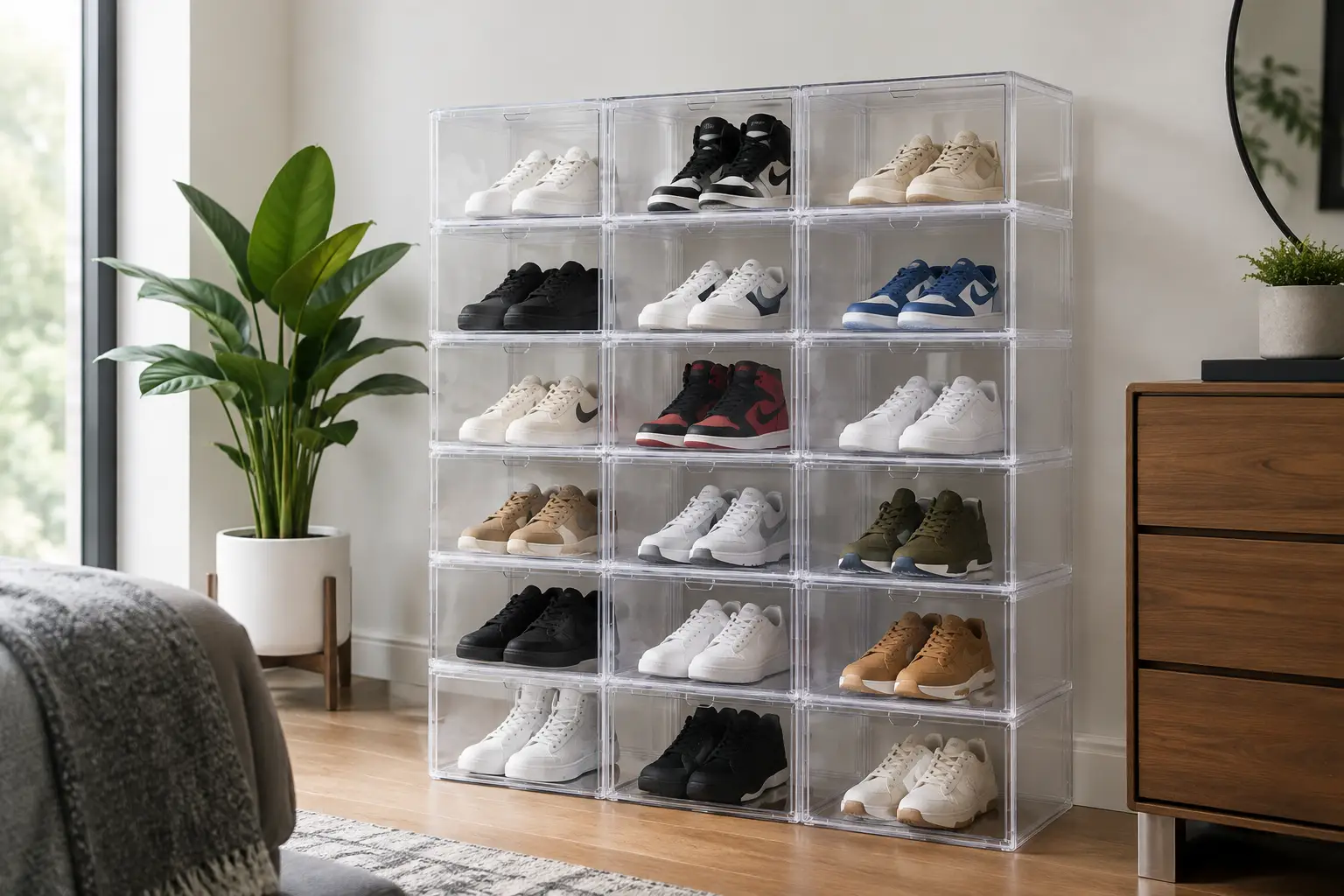
Your best pair should not be hidden under a bed, squeezed into a dusty closet, or stacked beneath shoes you wear every day. A shoe display case gives your kicks a proper place – keeping the shape, color, and details visible while bringing order to the room.
For collectors, a display case is more than storage. It is part of the sneaker game. The right setup turns a growing rotation into a clean visual feature, whether you have six everyday pairs or a wall of limited releases.
Sneakers pick up more than dirt on the street. Dust settles on suede, mesh, leather, and laces even when a pair is sitting indoors. Open shelves look great at first, but they leave shoes exposed to dust, accidental scuffs, pets, and the occasional spill. Cardboard boxes protect pairs from direct contact, yet they hide the collection and make finding one pair a frustrating guessing game.
A clear shoe display case solves both problems. It creates a protective barrier while letting you see exactly what is inside. That matters when you are getting ready quickly, but it also matters for the pairs you want to preserve. White midsoles, light-colored uppers, premium suede, and special-edition details all look better when they are clean, visible, and stored with intention.
There is also a simple organization benefit. When every pair has one defined space, your floor stays clear and your closet feels easier to manage. Instead of building unstable piles, you create a repeatable system that can grow one box at a time.
Not every storage box deserves space in your setup. Generic plastic bins can be useful for moving items, but they often look cloudy, flex under weight, and do little for a display-worthy collection. A sneaker-focused case should feel sturdy enough to stack, clear enough to show the pair, and roomy enough to avoid crushing the toe box or heel.
Before ordering cases, look at the biggest sneakers in your rotation. High-tops, basketball shoes, chunky runners, and large sizes need more breathing room than a low-profile lifestyle sneaker. A case that is technically large enough can still make a pair look cramped, especially if the laces, tongue, or collar press against the door.
Give your kicks enough clearance to sit naturally. This helps preserve their shape and makes the display look clean from every angle. If you own a mix of silhouettes, choosing one consistent case size usually creates a more polished wall than mixing random box styles.
Clarity is the whole point of displaying sneakers. Crystal-clear acrylic-style panels let colors, textures, and design details stand out without turning every pair into a blurry outline. They also make it easier to spot dust before it builds up.
Structure matters just as much. A display case should remain aligned when stacked, with panels that fit securely and doors that open without disturbing the boxes around them. Lightweight cases may cost less, but they can bow or shift once your collection gets taller. If you plan to build vertically, prioritize a firm, stackable design.
A beautiful case becomes annoying if you need to dismantle half the stack to reach one pair. Front-opening access is ideal for a working rotation because you can take out your sneakers and return them without lifting the box above. Side-opening designs can work well too, depending on where the setup sits.
The best choice depends on your room. A narrow closet may favor front access, while a longer shelf can make side access practical. Measure the clearance in front of the display before committing to a layout.
A shoe display case can make a room feel premium, but only when the layout has a little direction. Start by deciding what role the collection plays. Is it daily storage by the entryway, a closet upgrade, or a feature wall in your bedroom, office, or dressing area? The answer changes how high you stack, where you place your best pairs, and how often you will need access.
For a collector wall, keep the boxes in clean rows and columns. Matching cases create a uniform frame around sneakers with very different colors and silhouettes. Put your most worn pairs around waist or chest height for easy reach, then reserve the top rows for special releases, seasonal shoes, or pairs you want to admire more than wear.
Color organization can look sharp, but it is not the only option. You might group shoes by brand, silhouette, material, or purpose. Keep daily beaters in one section, clean white sneakers in another, and statement pairs where they can take center stage. A display should make sense to you first. Trends do not matter if you cannot find the pair you want.
Avoid placing cases in direct sunlight for long periods. Strong sunlight can fade materials and warm up enclosed spaces, especially near a window. Choose a cool, dry part of the room instead. A little distance from a busy doorway is smart too, since high-traffic areas bring more dust and accidental bumps.
A display box protects clean shoes. It does not erase what was already left on them.
After wearing a pair, remove surface dust and loose dirt before returning it to the case. For light cleanup, sneaker wipes are fast and convenient. For a deeper refresh, use a sneaker cleaner with the right brush for the material. Soft bristles are better for delicate uppers, while tougher areas such as midsoles and outsoles can handle more focused cleaning.
Make sure the pair is fully dry before storage. Closing damp shoes inside any container can trap moisture and create odors. This is especially relevant after a rainy day, a heavy cleaning session, or a long walk when your shoes have absorbed sweat. Let them air out in a shaded, ventilated spot first, then place them back once they feel dry.
For collector pairs you rarely wear, check them every few weeks. A quick wipe of the case exterior and a glance at the shoe condition keeps the whole setup presentation-ready. You do not need to over-handle the pair. The goal is simple: clean shoes, clear panels, and no surprises when it is time to wear them.
The most common mistake is overstacking before testing the stability of the surface below. A tall wall of boxes needs a level base, especially on carpet or uneven flooring. Start lower, check that each layer sits securely, and build up gradually. If a setup feels wobbly, it is not ready for another row.
Another mistake is storing shoes dirty because they will be “cleaned later.” Dirt can settle into textured rubber, fabric, and suede while the pair sits. Five minutes of care after wear is much easier than recovering a neglected pair months later.
Do not pack every case with extra items either. Shoe trees, silica packs, or spare laces may be useful in certain situations, but filling the box with unnecessary accessories makes it look cluttered and can press against the shoe. Let the pair be the focus.
Finally, do not treat every sneaker the same. A frequently worn gym shoe may need regular cleaning and easy access. A limited pair with delicate materials may deserve a higher, quieter spot in the display. Good organization is not just about matching boxes. It is about giving each pair the care its role requires.
The strongest sneaker setups feel personal without looking messy. A crystal-clear display system gives your collection a clean, gallery-style look while keeping your footwear ready for the next wear. Sneakkool’s acrylic shoe display boxes are made for that balance: visible presentation, dependable storage, and a cleaner home for every pair.
Start with the kicks you care about most, clean them properly, and give them a spot that matches their value. Once your shoes are off the floor and on display, the whole room carries a different kind of energy.
No account yet?
Create an Account