🚚
Use code
FLAT10
to get AED 10 OFF
on orders above AED 250.
🚚
Use code
FLAT10
to get AED 10 OFF
on orders above AED 250.
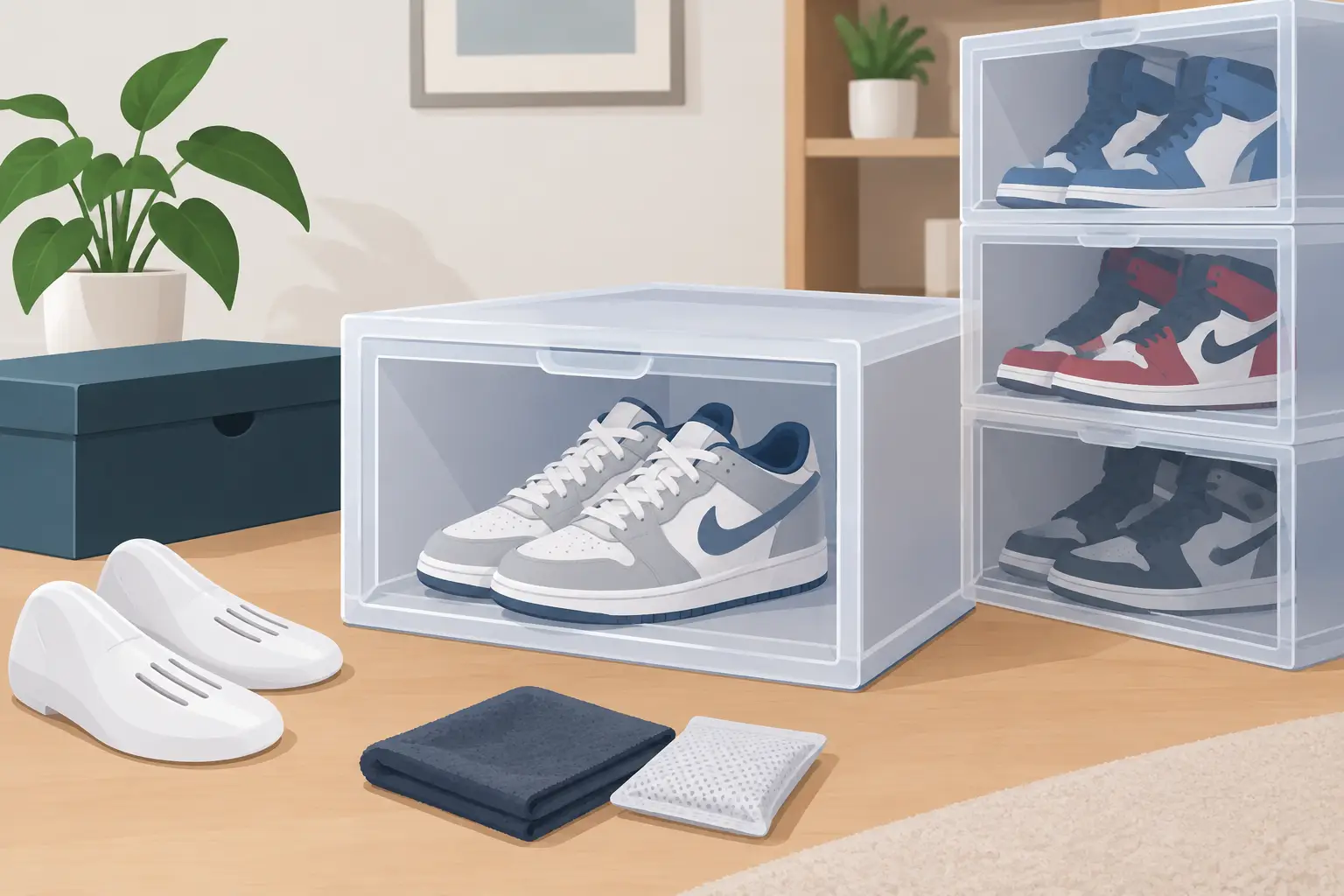
A pair of fresh kicks can lose its shape, yellow at the soles, or grow mildew without ever leaving the closet. Knowing how to store sneakers long term is less about hiding boxes away and more about controlling the conditions around your collection. Clean pairs, stable temperatures, low humidity, and proper support will keep your sneaker game looking sharp long after the last wear.
Never store sneakers after a wear, even if they look clean from a distance. Dust, street grime, sweat, and invisible moisture can sit in the mesh, lining, and outsole grooves. Over months, that buildup can cause odors, discoloration, and material breakdown.
Brush away loose dirt first, then clean the upper, midsoles, and outsoles with a sneaker-safe solution and a soft brush. Give extra attention to white rubber, suede panels, and textured soles where dirt likes to stay put. Avoid soaking the shoe. Too much water can weaken adhesives and leave moisture trapped beneath the insole or inside thick padding.
After cleaning, let every pair air-dry completely before storage. This is non-negotiable. A shoe that feels dry on the outside may still hold moisture around the tongue, heel padding, or toe box. Remove the laces and insoles if needed, then allow the pair to dry in a shaded, ventilated spot. Direct heat and harsh sunlight can warp foam, fade color, and dry out leather.
For pairs that have picked up a strong odor, deal with it before they go into storage. Long-term storage traps whatever is already inside the shoe. A fresh pair stays fresh. A sweaty pair becomes a problem waiting for the next unboxing.
Your storage location matters as much as your storage box. Heat speeds up material aging, while humidity encourages mildew and can affect glue, leather, suede, and fabric. For long-term storage, choose an indoor space with a stable temperature and low humidity.
Avoid garages, attics, balconies, damp basements, and storage areas beside water heaters or laundry machines. These spaces often go through major temperature swings. That is rough on sneakers, especially pairs made with foam midsoles, synthetic overlays, patent leather, or older glue constructions.
Sunlight is another quiet enemy. UV exposure can fade colored uppers, yellow translucent soles, and make some materials brittle over time. Even if a pair is stored near a window rather than directly in the sun, consistent light exposure can change the look of the shoe. Keep your collection away from bright windows or use a cabinet and boxes that shield it from direct light.
If you live somewhere humid, place moisture-absorbing silica packets near your stored pairs. They help manage excess humidity inside a box or enclosed storage area. Replace them regularly, especially during wetter months. Do not toss loose packets inside a shoe where they can snag delicate materials or leave marks. Keep them positioned neatly beside the pair.
The original shoe box is fine for short-term storage, but it is not always the best answer for a growing collection. Cardboard can soften in humidity, crush under stacked weight, and make it harder to remember what is inside. You also have to keep opening boxes to find the pair you want, which is not ideal when you own more than a few silhouettes.
Clear sneaker display boxes solve the visibility problem while giving each pair a defined home. A sturdy, crystal-clear box helps protect kicks from dust while letting you see your collection at a glance. It also creates a cleaner setup for closets, bedrooms, dressing rooms, and sneaker walls.
Look for boxes that stack securely and have enough room for your largest pairs without compressing the toe box or collar. Tight storage can bend leather, crease uppers, and distort high-top ankle areas. The goal is organized, not squeezed in.
For collectors, individual display boxes also make rotation easier. You can grab a pair without pulling down an entire stack of cardboard boxes. Sneakkool acrylic shoe display boxes are made for that balance of protection, clear presentation, and a clean organized look.
It depends on the pair and your priorities. Original boxes can matter for resale value, limited releases, and collectors who want a complete set. Keep them if you have the room, but do not assume they provide perfect long-term protection.
A practical approach is to store the sneakers in clear protective boxes for everyday organization and keep original boxes flattened or stacked safely elsewhere when condition and authenticity matter. If you prefer to keep each pair in its original box, label the outside with the model, colorway, and size so you are not constantly opening lids to find one pair.
Sneakers stored for months can develop collapsed toe boxes, bent tongues, and misshapen collars if they are left loose. Light shape support helps them hold their form, especially leather sneakers, high-tops, and pairs with soft foam construction.
Use clean, acid-free tissue paper or sneaker-specific shoe trees to support the toe box. Do not pack shoes aggressively with newspaper. Newspaper ink can transfer, and overstuffing can stretch the upper or create pressure marks. Shoe trees are useful for structured leather pairs, but use a size that fits correctly. A shoe tree forcing the toe box outward can do as much damage as leaving the shoe unsupported.
Store each pair side by side rather than stacking one shoe directly on top of the other. If space is tight, place a soft sheet of tissue between them so hardware, eyelets, or outsole edges do not rub against the upper.
Before storing, loosen the laces enough to relieve pressure across the tongue and eye stay. Tight lacing can leave dents in soft leather and knit uppers over time. You do not need to remove laces from every pair, but taking them out is helpful if they are dirty, damp, or likely to bleed color when stored.
Different materials need slightly different treatment. Leather benefits from being clean, dry, and supported. Suede and nubuck need protection from moisture and friction, so avoid storing them where another pair can rub against the surface. Knit and mesh sneakers need extra care around dust and shape retention. Patent leather should stay away from direct heat and contact with plastic surfaces that could leave marks.
Older sneakers require even more caution. Foam midsoles can crumble from age regardless of how carefully a shoe is stored, and some adhesives naturally weaken over time. Proper storage slows avoidable damage, but it cannot stop the aging process forever. For rare vintage pairs, consider storing them as collectibles rather than assuming they will remain safe to wear years later.
A common mistake is sealing sneakers in plastic bags to block out dust. It sounds protective, but airtight plastic can trap moisture and create the exact stale environment that causes odor and mildew. This is especially risky if the shoes were not fully dry before storage.
A ventilated display box or breathable storage setup is the smarter choice. You want protection from dust, crushing, and light while allowing the shoe to avoid a damp, sealed environment. If your storage room has humidity issues, improve the room conditions first rather than relying on a plastic bag around every pair.
Long-term storage should not mean forgetting your sneakers for three years. Check stored pairs every few months. Open the box, look for signs of moisture, sniff for odors, and inspect soles, uppers, and glue lines. This small habit lets you catch mildew or yellowing early instead of discovering damage when you finally want to wear the pair.
For shoes you plan to wear again, rotate them occasionally. Take them out, let them air out, and check whether the cushioning and outsole still feel sound. This is especially useful for foam-heavy running shoes, older basketball sneakers, and pairs with translucent rubber.
Keep the storage area clean, too. Dust around boxes, wipe down clear panels, and avoid piling clothing, bags, or heavy objects on top of your sneaker setup. A display system looks premium when it stays intentional.
The best long-term sneaker storage setup is one you will actually maintain: clean pairs, a stable indoor spot, light shape support, and boxes that let your collection stay protected without disappearing from view. Give every pair its space, and your kicks will be ready when it is time to bring them back into rotation.
No account yet?
Create an Account


One thought on “How to Store Sneakers Long Term Without Damage”