🚚
Use code
FLAT10
to get AED 10 OFF
on orders above AED 250.
🚚
Use code
FLAT10
to get AED 10 OFF
on orders above AED 250.
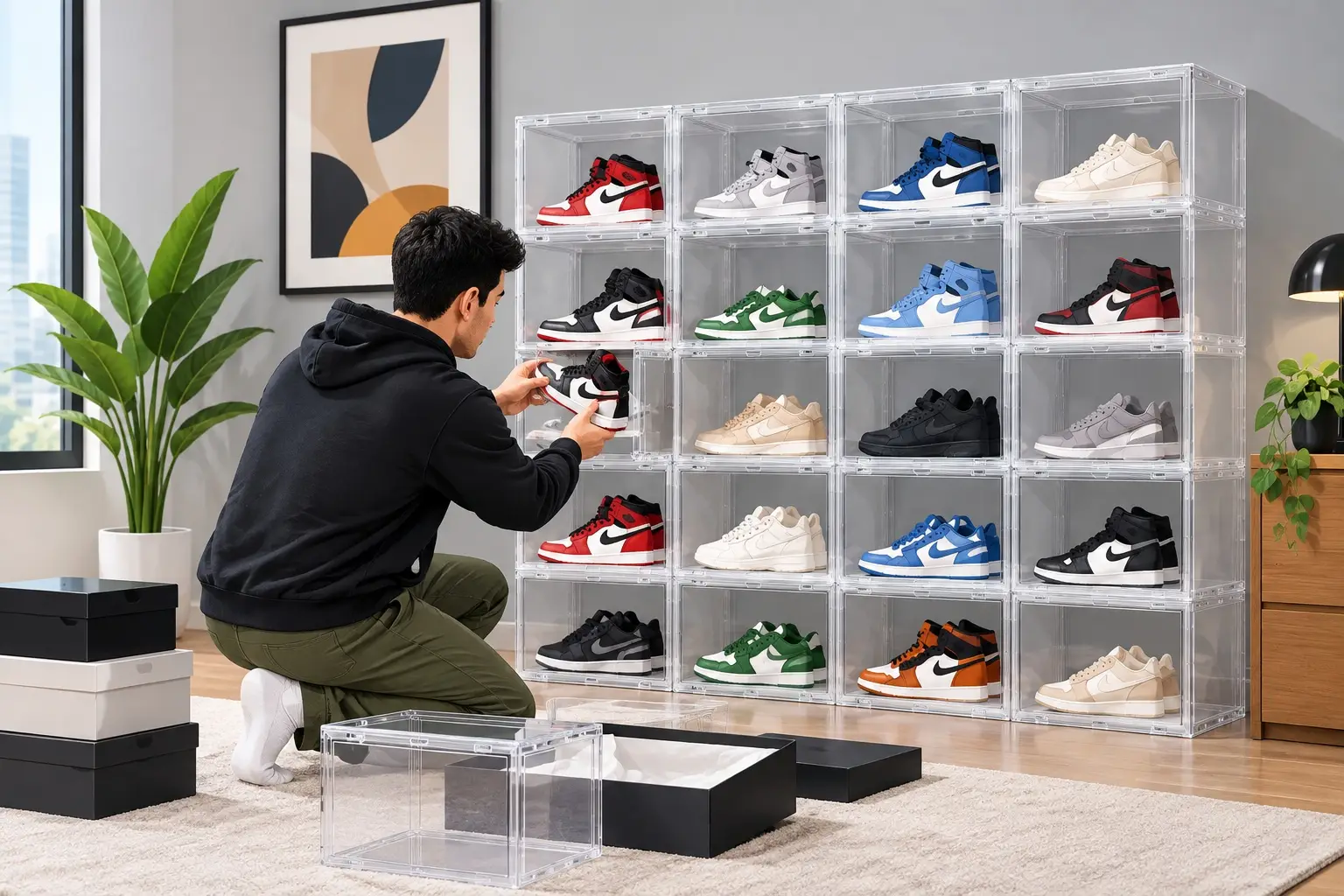
Your best pair should not be hiding under a pile of beaters, crushed in its original box, or collecting dust by the door. Knowing how to organize sneaker collection starts with treating every pair according to how you actually wear it. A clean setup makes getting dressed faster, protects the materials you paid for, and turns your kicks into part of the room instead of clutter in it.
This is not about lining up shoes by color just for a photo. The right system balances three things: access, protection, and display. A daily rotation needs to be easy to grab. Rare pairs need more protection. And the sneakers you are proud of deserve a clean, intentional presentation.
Before buying storage, pull out every pair you own. Yes, every pair. Check the closet floor, entryway, gym bag, car trunk, and the original boxes stacked in the corner. You cannot build a useful organization system around a collection you have not fully seen.
Place your sneakers in one open area and sort them by condition first. Set aside pairs that need cleaning, pairs that need repairs, and pairs that are ready to store. Dirt should never be sealed into a display box or left on a suede upper for months. Clean sneakers last longer, look better on display, and prevent odors from transferring to nearby pairs.
Then make a quick decision about each pair. Is it a frequent wear, an occasional pair, a collector piece, a travel pair, or a pair you no longer wear? Be honest here. A sneaker collection becomes difficult to manage when every shoe gets treated like a grail.
If you have pairs that are worn out beyond repair or no longer fit your style, move them out of the main setup. Donate them, sell them, or keep one designated pair for messy errands. Less noise gives your strongest sneakers room to stand out.
The easiest way to keep your sneaker game organized is to create zones based on wear frequency. This prevents the daily rush of digging through boxes and keeps special pairs from taking unnecessary damage.
Your most-worn sneakers should live at eye level or near the door, depending on your space. These are the pairs you wear to work, class, the gym, or weekend plans. They need airflow, quick access, and a habit of regular cleaning.
A small rotation zone works especially well for people who wear only five to eight pairs consistently. Keep it tight. If every sneaker is within reach, the area quickly turns into a messy shoe pile again. Rotate pairs in and out as your style, schedule, or weather changes.
Limited releases, premium leather sneakers, suede pairs, and clean white kicks need more than a dark shelf or a cardboard box. Clear acrylic display boxes offer structure while letting you see the collection at a glance. You can find the exact pair without pulling down five boxes, and the shoes stay protected from dust, accidental scuffs, and leaning stacks.
For a polished look, place one pair per box and face both toe boxes in the same direction. Keep matching pairs together rather than separating left and right shoes to save space. The visual difference is huge: your collection feels like a display, not storage.
Do not mix dirty post-wear shoes with freshly cleaned pairs. Set aside a small area for sneakers waiting to be cleaned, whether that is a tray near the entryway or one lower shelf in your closet. Once a pair has been cleaned and dried fully, return it to its proper zone.
Keep your brush, cleaning solution, wipes, and microfiber cloth together nearby. The easier your kit is to reach, the more likely you are to clean marks before they set in. Sneakkool brings that care-and-storage mindset together, which is exactly what a growing collection needs: clean kicks deserve clean storage.
The best sneaker storage depends on your collection size and your home. A studio apartment, walk-in closet, bedroom wall, and dedicated sneaker room all call for different choices. The goal is not to copy someone else’s setup. It is to make your own space work harder.
Clear stackable boxes are ideal when you want visibility and a premium display. They use vertical space well and create a uniform look even when your sneakers range from retro basketball silhouettes to slim runners. Make sure the boxes are sturdy enough to stack without bowing or shifting. A flimsy box may save money upfront, but it will not protect premium pairs when the stack gets tall.
Original boxes can work for long-term storage if they are clean, dry, and labeled clearly. The trade-off is visibility. You may preserve a pair well, but you will spend more time opening boxes to find it. If you keep original boxes for resale value, store them separately and use clear display storage for the sneakers you wear or showcase.
Open shelves are great for a simple, accessible rotation, but they collect dust faster. Use them for everyday pairs rather than delicate suede or light-colored collector shoes. Under-bed storage can be useful in smaller spaces, although it is better for seasonal sneakers than pairs you want to grab every day.
There is no single perfect order for every collector. The strongest method is the one that lets you find a pair without thinking too hard. For some people, that means grouping by brand. For others, it means color, silhouette, or purpose.
Try organizing by category first: lifestyle sneakers, performance pairs, high-tops, low-tops, neutral colors, statement pairs, and beaters. Within each category, arrange by color or frequency of use. This gives the display a clean rhythm without making it difficult to maintain.
Color order looks sharp in clear boxes, especially if your collection includes lots of white, gray, black, and earth-tone pairs. Brand order makes more sense if you collect specific models or want all your Jordans, Dunks, New Balance pairs, or runners together. The right answer depends on what you reach for and what you want to see when you walk into the room.
Avoid changing the system every week. Once you choose an order, live with it for a month. If you are constantly moving boxes around, the system is probably too complicated.
Organization is also preservation. Never store sneakers while they are damp from cleaning, rain, or sweat. Moisture trapped in a closed space can lead to odors, discoloration, and material damage. Let each pair air dry naturally before returning it to a box or shelf.
Use shoe trees or carefully placed stuffing for pairs that crease easily or lose their shape. This is particularly helpful for leather toe boxes and structured lifestyle sneakers. Do not overstuff them. You want support, not pressure against the upper.
Keep your collection away from direct sunlight, strong heat, and humid corners of the home. Sunlight can fade colors. Heat can affect glues and foam over time. A crystal-clear display box protects from dust, but it cannot cancel out a spot beside a hot window.
For sneakers you will not wear for months, inspect them occasionally. Check for yellowing, moisture, sole separation, or changes in the material. Long-term storage is not a reason to forget a pair completely.
A great sneaker wall can fall apart after one busy week if it requires too much effort. Build a five-minute reset into your routine. After wearing a pair, knock off loose dirt, wipe down small marks, let the shoes air out, and return them to the correct zone. That is enough to stop disorder before it starts.
Once a month, clean your display boxes or shelves, reassess your daily rotation, and check which sneakers have been sitting untouched. You may discover that a pair belongs in a higher display spot, a travel bag, or outside the collection entirely.
Your collection should feel personal, not precious to the point where you cannot enjoy it. Give every pair a place, keep the clean pairs clean, and leave room for the next pair that earns its spot.
No account yet?
Create an Account