🚚
Use code
FLAT10
to get AED 10 OFF
on orders above AED 250.
🚚
Use code
FLAT10
to get AED 10 OFF
on orders above AED 250.
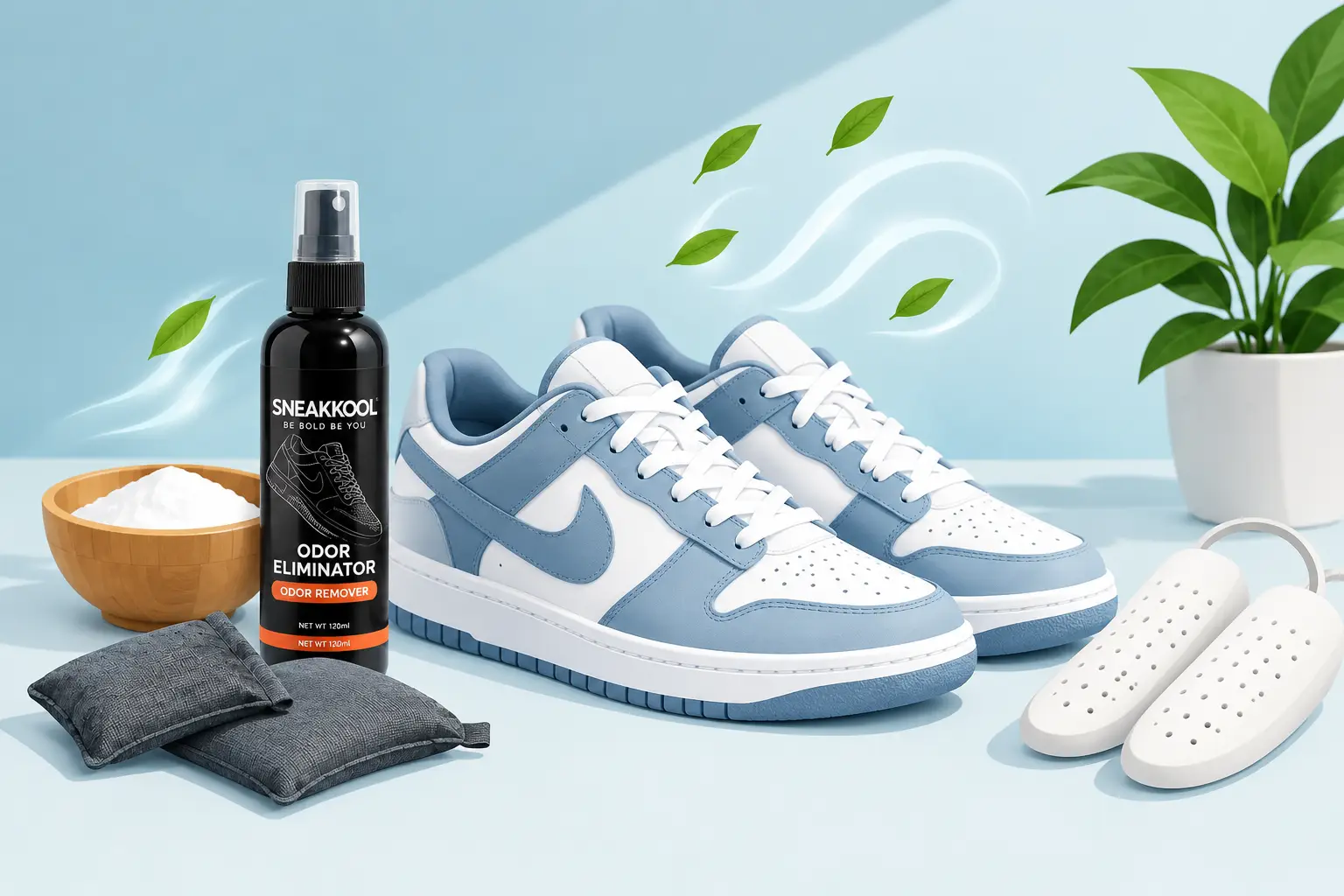
That fresh-pair feeling disappears fast when you take off your kicks and the room notices first. Sneaker odor is not always a sign that your shoes are dirty on the outside. It usually means sweat, moisture, and bacteria have settled into the insole, lining, or tongue. Knowing how to remove sneaker odor starts with treating the source instead of just spraying over it.
The good news: most sneakers can smell fresh again without soaking them, bleaching them, or risking damage to suede, leather, mesh, and glue. A consistent cleaning and drying routine does more for your sneaker game than a strong fragrance ever will.
Feet sweat, especially during long workdays, gym sessions, summer walks, and travel. That moisture gets trapped inside a closed shoe, where bacteria feed on sweat and create the odor you recognize. The problem gets worse when sneakers go straight from your feet into a dark closet, gym bag, or tightly packed storage bin.
Even premium kicks are vulnerable. Breathable mesh can hold odor deep in its fibers, while padded collars and foam insoles retain moisture longer than you might expect. Wearing the same pair every day gives the interior no real chance to dry out.
A quick sniff test can help you judge the issue. If the odor is mild and only appears after wear, airing out and basic care may be enough. If the smell returns immediately after drying or survives a surface clean, it is time to clean the interior more thoroughly and check the insoles.
Start by taking out the laces and removable insoles. This opens up the shoe and exposes the areas where sweat collects most. Set the sneakers somewhere with steady airflow, away from direct sunlight and high heat. Heat can warp foam, dry out leather, weaken glue, and cause yellowing on some midsoles.
Use a sneaker-safe cleaning solution with a soft brush or microfiber cloth to clean the footbed, inner lining, tongue, and heel area. Work with light pressure. The goal is to lift sweat residue and dirt, not flood the shoe with water.
For mesh or fabric interiors, a lightly dampened brush can reach into the fibers without saturating them. For leather-lined sneakers, use less moisture and wipe carefully. Suede and nubuck need extra caution: keep cleaning solution off the exterior nap whenever possible, and use a material-appropriate brush on the outside.
Clean the removable insoles separately. Give both sides attention, especially beneath the heel and forefoot. If an insole is visibly worn, stays damp for hours, or still smells after cleaning, replacing it can be the simplest fix. Fresh insoles are often a smarter move than repeatedly masking a stubborn odor.
Once the inside is clean, place an odor-absorbing material inside each dry shoe. Baking soda can help, but do not pour loose powder directly into the sneaker. It can settle into stitching and fabric, leaving residue behind. Put it in a breathable pouch, a clean sock tied at the top, or a small fabric bag instead.
Activated charcoal pouches are another clean option for regular maintenance. They absorb lingering moisture and odor without adding perfume. Use one pair for your everyday sneakers, especially if you rotate between work, gym, and weekend kicks.
Avoid relying on heavily scented sprays. They may make a sneaker smell temporarily better, but fragrance mixed with sweat can become its own problem. If you use a deodorizing spray, choose one made for footwear and apply it only after the sneaker has been cleaned and allowed to dry.
This is the step people skip, then wonder why the smell returns. Leave your sneakers open, with tongues pulled forward, for at least overnight. If they were heavily damp from rain, a workout, or cleaning, give them longer.
You can loosely fill the toe box with plain paper to pull out excess moisture and help the shoe keep its shape. Replace the paper if it becomes wet. Do not use a hair dryer, put sneakers in a clothes dryer, or place them directly on a radiator. Fast heat feels convenient, but it is rough on materials and construction.
Some home fixes create more damage than they solve. Keep these four mistakes off your sneaker-care checklist:
It depends on the shoe, of course. A simple canvas pair can usually handle more moisture than a suede lifestyle sneaker or a pair with delicate overlays. When in doubt, use less water, softer tools, and more drying time.
The easiest way to beat odor is to make drying part of your routine. After taking off your sneakers, loosen the laces, pull the tongue forward, and let them air out before they go into storage. This takes less than a minute and prevents moisture from building up day after day.
Rotate your pairs when possible. Giving a sneaker 24 hours between wears helps the interior dry naturally and reduces the bacterial buildup that causes odor. For collectors, rotation also protects cushioning from constant compression and keeps your favorite pairs looking less worn.
Socks matter more than most people think. Clean, moisture-wicking socks reduce the sweat transferred into the shoe. If you wear sneakers without socks, odor can build up much faster because sweat is going directly into the lining and footbed.
Keep your storage setup clean, too. Wipe down shelves, clean travel bags periodically, and never place damp sneakers beside a freshly cleaned pair. Once your kicks are fully dry, storing them in a structured, well-ventilated setup keeps dust off and makes it easier to see which pairs need attention. Sneakkool’s sneaker-care approach pairs that regular cleaning habit with clear, protective organization, so your collection stays presentation-ready instead of hidden away with trapped odor.
If odor returns after you have cleaned the interior, dried the pair fully, and treated the insoles, look closer. Check for old moisture under glued-in insoles, mildew-like spots, or material breakdown around the heel. A musty smell after water exposure can signal that the shoe never dried fully.
For valuable, vintage, or delicate sneakers, professional cleaning may be worth it if the smell is severe. The same goes for pairs with mold, extensive water damage, or sensitive materials that should not be treated with common cleaners. Saving a prized pair is better than experimenting with an aggressive DIY fix.
Fresh sneakers are not just about the first impression when you walk into a room. They feel better to wear, last longer with proper care, and deserve a spot in your rotation. Clean the source, dry with patience, and give every pair room to breathe before it goes back on display.
No account yet?
Create an Account


One thought on “How to Remove Sneaker Odor Without Damaging Kicks”