🚚
Use code
FLAT10
to get AED 10 OFF
on orders above AED 250.
🚚
Use code
FLAT10
to get AED 10 OFF
on orders above AED 250.
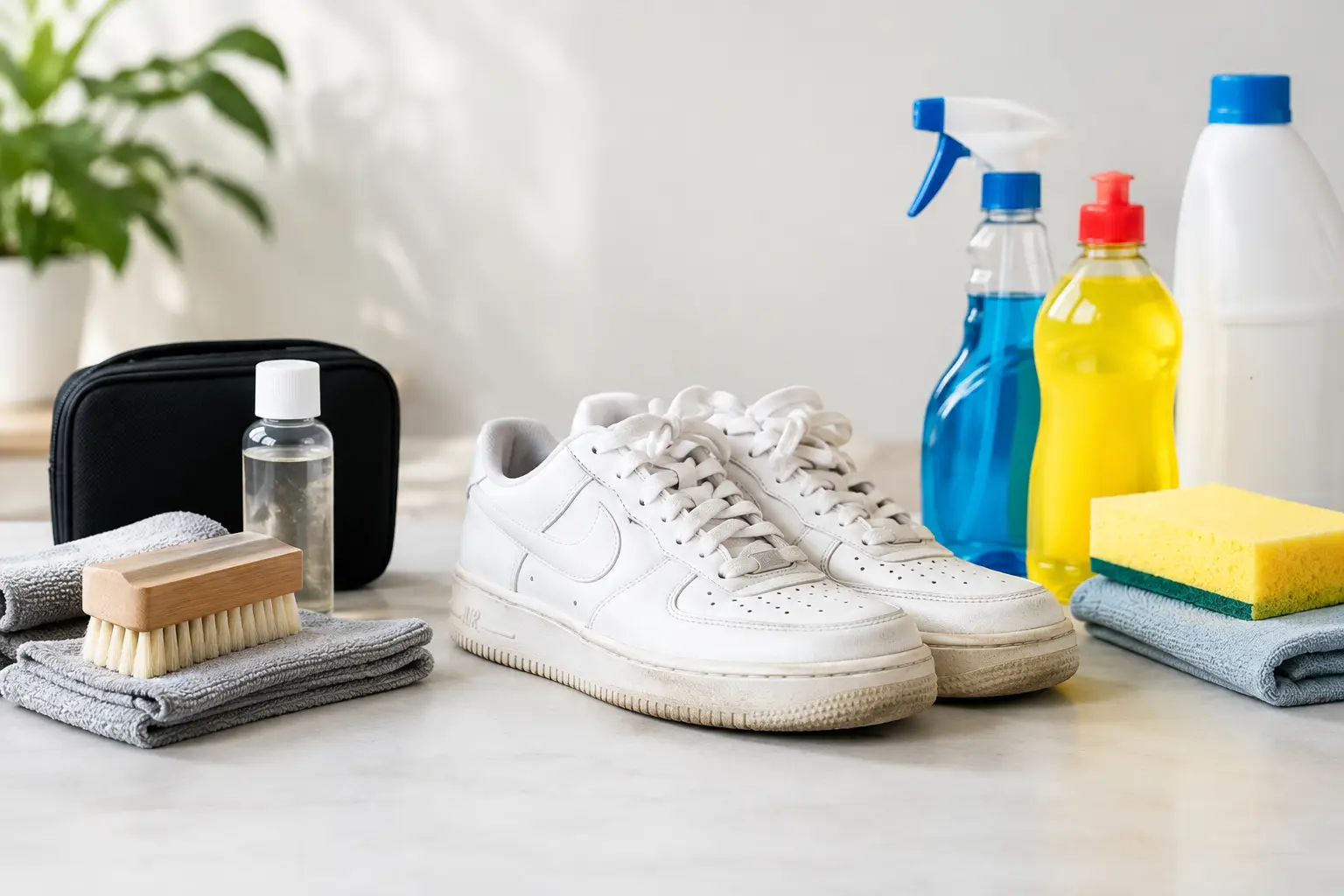
A white midsole, fresh suede panel, or clean mesh upper can change the whole look of your fit. But one rushed cleanup with dish soap, bathroom spray, or an old kitchen sponge can leave your kicks looking worse than the dirt did. When comparing cleaning kits versus household cleaners, the real question is not whether a cleaner can remove a stain. It is whether it can do it without fading color, weakening glue, roughing up delicate materials, or leaving residue behind.
For sneaker owners, cleaning is maintenance. For collectors, it is preservation. Purpose-built sneaker care products are designed for both.
Household cleaners are made for broad jobs: degreasing a countertop, disinfecting a bathroom surface, polishing glass, or lifting stains from fabric. Sneakers are not broad jobs. One pair can combine leather, mesh, suede, rubber, foam, stitching, printed graphics, and glued sections in the same design.
That mix matters. A strong all-purpose cleaner may cut through grime, but it can also strip a material’s finish or leave it dry and dull. Bleach-based products can discolor white fabric and damage colored panels. Heavy detergents may be difficult to rinse out of mesh, leaving a stiff or sticky feel once the shoe dries. Even a basic soap can be too aggressive when used in the wrong amount.
A sneaker cleaning kit is built around controlled cleaning. It typically pairs a sneaker-safe solution with a brush that can reach textured soles, seams, and uppers without treating every part of the shoe like a tiled floor. The goal is a clean result that still looks like your sneaker.
That does not mean every household product is automatically bad. A soft microfiber cloth, lukewarm water, and a mild soap mixture can help with a light emergency touch-up on durable rubber. The trade-off is consistency. You need to know what is in the product, how much to dilute it, and whether it is safe for the exact material in front of you. A dedicated kit removes much of that guesswork.
The biggest mistake in sneaker care is treating all dirt the same. Dust on smooth leather, mud on a rubber outsole, and a drink spill on suede require different levels of moisture, pressure, and brushing.
Mesh and knit sneakers trap dust deep in their fibers. They can look clean from a distance while carrying a gray, uneven tint up close. Household sprays often create too much foam or leave residue that attracts more dirt after the next wear.
A sneaker-safe solution used with a soft brush gives you more control. Work in small sections, use minimal water, and wipe away loosened dirt with a clean microfiber cloth. Soaking the upper is rarely the move, especially if the sneaker has foam padding or color blocking that could bleed.
Smooth leather is usually easier to wipe down, but it still needs care. Aggressive household degreasers can remove surface coatings and make the material look flat. Synthetic leather can crack or peel when repeatedly exposed to harsh chemicals.
For these pairs, gentle circular cleaning with a soft brush or cloth is usually enough. Clean the panel, wipe away product, and let the shoe air-dry away from direct heat. A hair dryer or hot balcony can warp glue and dry materials too quickly.
Suede is where improvised cleaning gets risky fast. Water can leave marks, while strong cleaner may harden the nap or shift the color. A household scrub brush can flatten the texture permanently.
Start dry whenever possible. Lift loose dust with a suede-friendly brush and use a small amount of appropriate cleaner only when necessary. If the stain is deep, patience beats panic. Rubbing harder usually spreads the problem across a larger area.
Rubber can handle more cleaning than an upper, which is why people often reach for toothpaste, dish soap, or multipurpose sprays. Some of those methods may brighten a midsole for the moment, but abrasive particles and repeated harsh cleaning can wear down printed details or leave a chalky finish.
A firmer sneaker brush and a controlled cleaner are better for grooves, traction patterns, and edge dirt. This is also the area where cleaning wipes are useful for a quick refresh after a dusty day out.
Household cleaners can seem cheaper because they are already in the cabinet. That calculation changes if one product causes fading on a favorite pair, makes a suede panel patchy, or weakens the adhesive around a sole.
There is also a time cost. With generic products, you may need separate solutions for dirt, stains, odor, and residue. Then comes the trial-and-error phase: testing a hidden spot, figuring out dilution, changing brushes, and hoping the material dries evenly. A cleaning kit organizes the routine into a repeatable process.
For a casual pair of canvas beaters, a basic at-home method may be enough. For limited releases, premium leather sneakers, white mesh runners, or any pair you want to keep presentation-ready, specialized care is the safer value.
Not every kit offers the same level of care. Look for a setup that makes regular cleaning simple rather than turning it into a weekend project. The useful basics are a sneaker-safe cleaning solution, a soft brush for uppers, a firmer brush for soles, and a microfiber cloth for wiping away moisture and foam.
Cleaning wipes add a second kind of convenience. They are not a replacement for a full clean after mud or heavy staining, but they are ideal for fast touch-ups. Keep a pack in your car, work bag, or travel bag for scuffs on midsoles, dust on leather, and small marks before they settle in.
A care combo pack can make even more sense if you rotate several pairs. You have the supplies ready when your daily sneakers need attention, instead of borrowing a random bottle from the kitchen every time a spill happens.
Sneakkool focuses on that complete care routine: practical products for cleaning, protecting, storing, traveling with, and displaying your sneaker collection. Clean shoes stay cleaner longer when they are stored properly, rather than left exposed on the floor or piled into a crowded closet.
The best cleaning method is the one you actually repeat. Do a quick wipe after dusty wear, then give your sneakers a proper clean before dirt becomes embedded in the material. Remove laces when needed, brush off dry debris first, and clean the upper before moving to the midsole and outsole.
Use less solution than you think. Excess water is one of the most common causes of water marks, slow drying, and messy foam. Once finished, stuff the shoes lightly with clean paper to help them hold their shape, then let them air-dry indoors with good ventilation.
Avoid washing sneakers in a washing machine unless the manufacturer specifically approves it. The spinning, soaking, and heat can affect structure, cushioning, glue, and shape. It may feel like the fastest option, but it is a high-risk shortcut for pairs you care about.
There is a reasonable place for household tools in a sneaker routine. A clean microfiber cloth is essential. Mild soap can work in a pinch on a rubber edge. Baking soda may help freshen insoles when used carefully and kept away from delicate uppers.
The key is knowing the limit. Household products are backup tools, not a complete sneaker-care system. Do not use bleach, abrasive powder cleaners, strong alcohol sprays, dishwashing tablets, or hard kitchen brushes on your sneakers. If you cannot identify the ingredients or predict the material reaction, do not experiment on the pair you want to save.
Your sneaker game does not need a complicated routine. It needs the right products, light pressure, and a little consistency. Clean your kicks before dirt becomes permanent, store them where they stay protected, and let every pair look ready for the next wear.
No account yet?
Create an Account