🚚
Use code
FLAT10
to get AED 10 OFF
on orders above AED 250.
🚚
Use code
FLAT10
to get AED 10 OFF
on orders above AED 250.
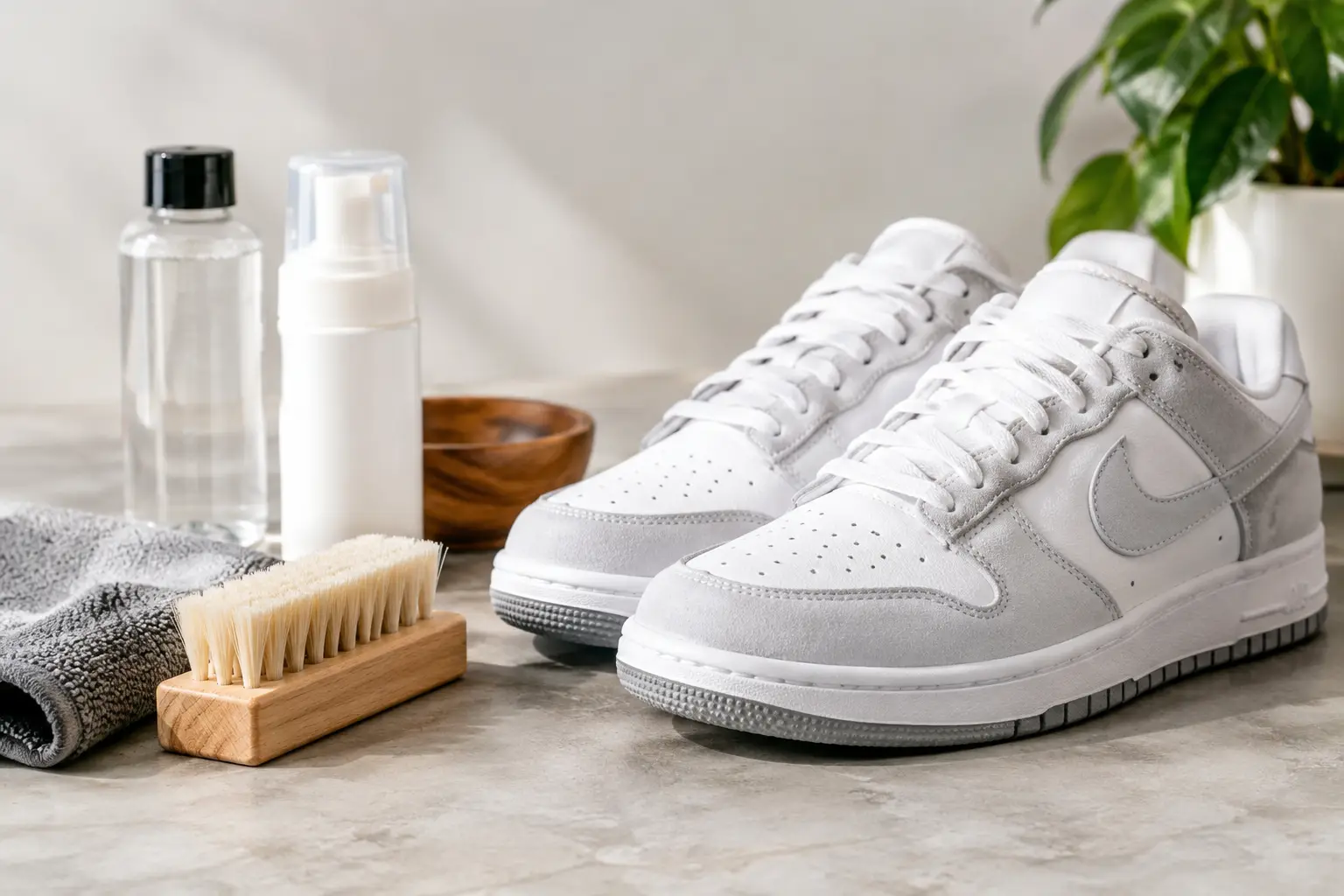
That fresh-out-of-the-box look can disappear fast when the wrong cleaner hits the wrong material. A white leather pair may handle a gentle wipe with no problem, while one rushed scrub on suede can leave a dark patch that is hard to fix. This guide to sneaker material care helps you treat every pair based on what it is made of, so your kicks stay clean, protected, and ready for the next wear.
Before cleaning, check the upper, lining, outsole, and any mixed-material panels. Most sneakers are not made from one fabric alone. A pair may combine leather overlays, mesh toe boxes, suede heel panels, rubber midsoles, and foam padding. Each part needs a slightly different approach.
The safest habit is to use as little moisture and pressure as the job allows. Heavy soaking can loosen glue, cause water marks, and leave sneakers smelling less than fresh. Aggressive brushing can rough up delicate fibers or take color off painted details.
Build your setup around sneaker-specific essentials: a soft brush for uppers, a firmer brush for soles, a microfiber cloth, cleaning solution, and clean water. Remove laces before you begin so you can reach the tongue and eyelets properly. If the sneakers are muddy, let the mud dry first, then brush it away before adding any cleaner.
For serious collectors, it also pays to test a small, hidden spot before treating the whole shoe. That extra minute can save a favorite pair.
Smooth leather is one of the easiest materials to maintain, but it still does not love harsh household products. Bleach, strong degreasers, alcohol-heavy wipes, and rough sponges can dry the surface, dull its finish, or create uneven color.
Start by dry-brushing loose dust. Then use a soft brush or microfiber cloth lightly dampened with sneaker cleaner. Work in small sections with gentle circular motions, especially around creases and the edge where the upper meets the midsole. Wipe away residue with a clean damp cloth and let the pair air-dry indoors.
White leather can tempt you into scrubbing harder. Resist it. Repeated heavy scrubbing can remove the top coating and make future stains settle in faster. For stubborn scuffs, use a targeted cleaner sparingly rather than soaking the entire shoe.
After the pair is dry, store it away from direct sunlight and extreme heat. Leather can yellow, crack, or become stiff when it spends too long in a hot car or against a sunny window.
Patent leather needs even less friction. Its glossy surface shows scratches, so use a soft microfiber cloth first. If a cleaner is needed, apply it to the cloth rather than directly onto the shoe. Buff gently and avoid abrasive brushes completely.
Suede gives a sneaker instant premium energy, but it is also the material that punishes shortcuts. Water can leave rings, and wet scrubbing can flatten the soft nap that gives suede its texture. Nubuck is similarly delicate, even though it has a finer, more velvety finish.
Clean these pairs dry whenever possible. Use a suede brush with light, consistent strokes in one direction to lift dust and revive the texture. For a small dry mark, a suede eraser can help when used gently. Do not grind it into the material.
If you have a fresh liquid spill, blot it immediately with a clean dry cloth. Do not rub. Let the affected area dry naturally before brushing it back into shape. For oil-based stains, home remedies can make the problem worse, especially if they leave residue or change the color. A professional cleaning service may be the smarter move for a prized suede pair.
Protective spray can make a real difference before the first wear, particularly if your sneakers will face dusty streets, unexpected rain, or a long day out. Protection is not a free pass to wear suede through bad weather, but it gives you more time to react when a spill happens.
Mesh runners, knit lifestyle sneakers, and fabric uppers collect dust deep in their fibers. They also absorb water quickly, which means oversaturating them can lead to slow drying, water lines, and trapped odors.
Use a soft brush with a small amount of diluted sneaker cleaner. Brush lightly in short strokes, focusing on one panel at a time. The goal is to lift dirt from the fabric, not push it deeper into the weave. Wipe with a barely damp microfiber cloth, then stuff the shoe loosely with plain white paper to help it keep its shape while drying.
Avoid tossing sneakers in the washing machine unless the manufacturer specifically allows it. Even if the upper survives, agitation and heat can weaken adhesives, warp foam, damage structured panels, and make a pair look tired before its time.
For white mesh, patience beats force. Clean it more often with lighter sessions instead of waiting until the dirt is deeply embedded. Regular maintenance keeps the material brighter and reduces the need for heavy treatment.
Canvas looks easygoing, yet it can fade and shrink if mishandled. Use a soft brush and a light cleaning solution, working around printed graphics or colored stripes with care. Do not soak canvas until it is dripping wet. Excess water can pull dyes, create uneven drying, and soften glue around the sole.
Treat stains promptly, then air-dry the pair in a shaded, ventilated spot. Direct heat from a dryer, radiator, or hair dryer can shrink canvas or make rubber foxing turn yellow over time. If the shoe has bright colors, keep it out of direct sunlight while drying.
A clean upper will not look complete if the midsole is gray, streaked, or caked with dirt. Rubber outsoles and sidewalls can handle a firmer brush than delicate uppers, but foam midsoles need a lighter touch. Too much pressure can damage textured finishes or remove paint from colored foam.
Clean the outsole first if it is especially dirty, so grime does not transfer back onto the upper. Then work around the midsole with a medium brush or cloth. For grooves and tight edges, use a smaller brush rather than digging with sharp objects that can scratch the material.
Yellowing is different from surface dirt. Cleaning may improve the look, but it cannot always reverse oxidation. Keeping pairs cool, dry, and out of strong light gives you a better shot at slowing it down.
Laces carry more dirt than most sneaker owners realize. Remove them and hand-wash them separately in mild cleaning solution. Rinse well, press out excess water with a towel, and air-dry. Replacing badly frayed laces is a quick way to make an older pair look sharper.
Insoles should be removed after heavy wear whenever possible, especially after workouts or long summer days. Wipe them lightly if needed and let them air out fully before putting them back. Do not hide damp sneakers inside a closed box or travel bag. Moisture needs an exit.
Odor is usually a moisture problem before it is a cleaning problem. Rotate your pairs, allow time to dry between wears, and use a sneaker-safe deodorizing option instead of masking the smell with fragrance. If a pair is soaked, remove the laces and insoles, stuff it with white paper, and give it time. Heat is faster, but it is rarely kinder to sneakers.
Cleaning is only half the sneaker game. A perfectly cleaned pair can still crease, collect dust, fade, or get crushed in a crowded closet. Keep your sneakers in a cool, dry space away from direct sun. Avoid piling boxes under heavy items, and do not store shoes while they are damp.
Clear display boxes are a strong choice for collectors because they protect pairs while keeping your rotation visible. They also make it easier to reach for the right kicks without disturbing the rest of the collection. For travel, use a structured shoe bag that keeps dirty soles away from clothing and prevents uppers from getting crushed.
Sneakkool brings cleaning, travel protection, and crystal-clear organization into one setup, which makes routine care easier to stick with instead of saving it for a major cleanup.
The best routine is not the longest one. After each wear, take ten seconds to brush off visible dust and check the soles. After a few wears, wipe down leather or rubber panels and air out the insoles. Give the pair a deeper clean when dirt begins to settle into the material, not months later when every mark has become a project.
Material care is not about keeping every sneaker factory-new forever. It is about letting your favorite pairs age cleanly, wear confidently, and still look like they belong in your rotation.
No account yet?
Create an Account