🚚
Use code
FLAT10
to get AED 10 OFF
on orders above AED 250.
🚚
Use code
FLAT10
to get AED 10 OFF
on orders above AED 250.
That first crease across a fresh toe box can feel personal, especially when you have only worn the pair a few times. The truth is, learning how to prevent sneaker creases is less about never bending your shoes and more about controlling the habits that cause deep, permanent-looking lines. Your kicks are built to flex. The goal is to keep that flex natural, supported, and clean.
A good routine starts before you step outside. Fit, lacing, walking habits, cleaning, and storage all play a part. Get those basics right and your everyday pairs will stay sharper for longer, while your collectible heat remains display-ready.
The wrong size is one of the fastest ways to create harsh toe-box creasing. If a sneaker is too big, your foot slides forward and the upper repeatedly folds in the same place. If it is too tight, the material is forced outward every time you take a step. Neither situation is great for leather, synthetic panels, or soft mesh.
Aim for a secure fit with a little room at the front – roughly a thumb’s width is a useful starting point, though the right amount depends on the shape of the shoe and your foot. Your heel should feel planted, not loose. A well-fitted sneaker moves with your foot instead of fighting it.
Sizing can vary a lot between silhouettes. A basketball-inspired high-top may feel different from a slim lifestyle runner, even in the same labeled size. Try on new styles when you can, and do not buy a size up just for extra comfort unless you can lock down the heel with lacing.
Laces do more than finish the look. When the midfoot is loose, your foot shifts toward the toe with every stride, increasing pressure on the vamp. Tighten the laces enough to keep your heel in place, but avoid cranking them down so hard that the tongue digs in or the upper pulls unnaturally.
For wider feet, skip a lower eyelet or use a slightly looser forefoot pattern rather than forcing yourself into a narrow fit. Comfort matters. A sneaker that hurts is not a sneaker you will wear well.
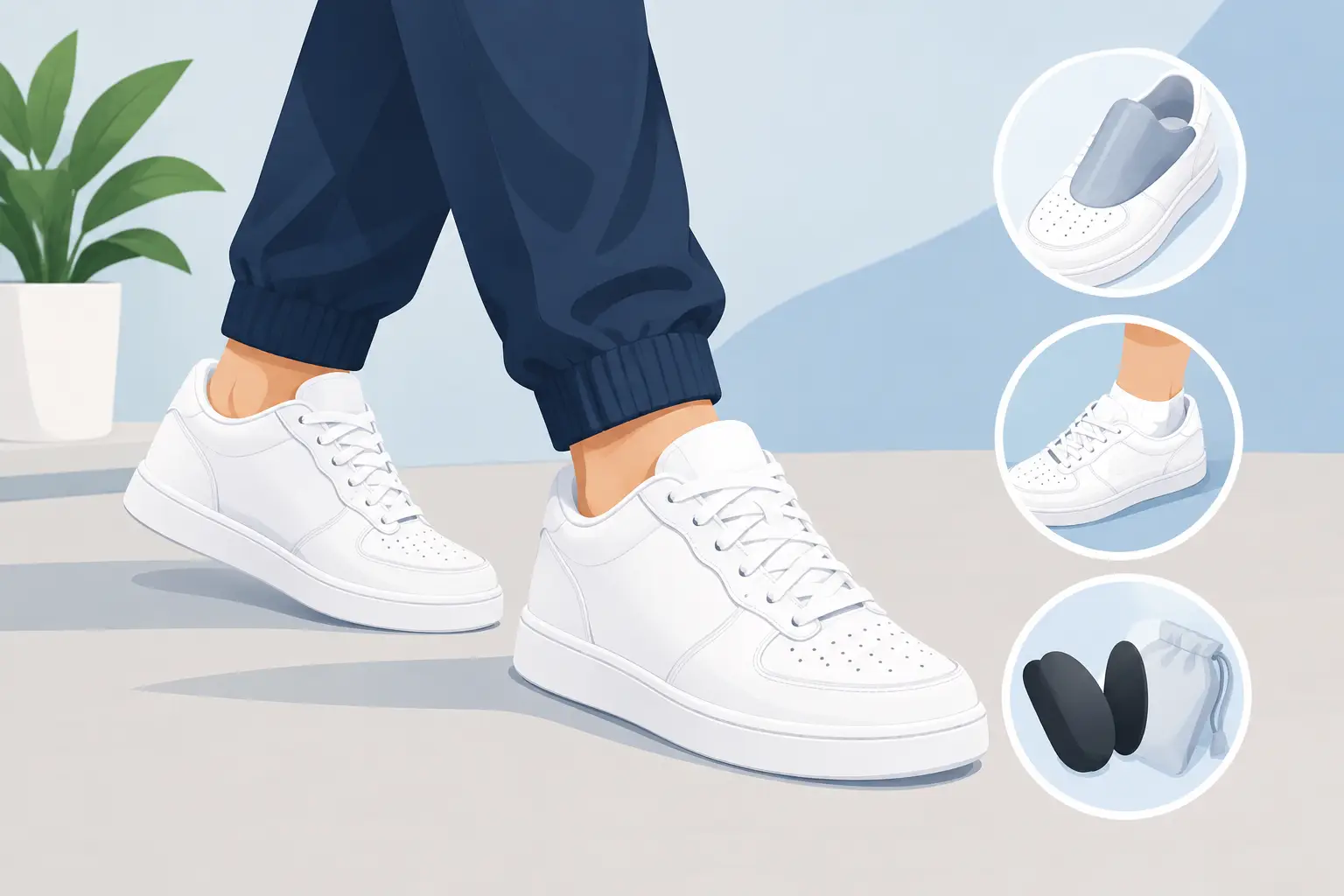
Crease protectors are the most direct accessory for reducing toe-box folds. They sit inside the front of the shoe and give the upper a firm surface to flex against. They work particularly well in leather sneakers, where repeated folding can leave a visible line that deepens over time.
The trade-off is comfort. A rigid protector in a snug shoe can press on your toes, cause rubbing, and make a long day feel miserable. Choose a pair that can be trimmed to fit, then test them at home for an hour before wearing them out. If you feel pressure at the tips of your toes, cut a little more material or switch to a softer option.
Think of crease protectors as support, not armor. They can reduce the severity of creases, but they cannot make a sneaker completely motionless while you walk. That is normal. Overusing an overly stiff insert can do more harm to comfort than good for the shape of the shoe.
You do not need to walk like a robot to keep sneakers looking fresh. But small changes in how you move can make a noticeable difference, especially with structured leather pairs.
Avoid crouching low on the balls of your feet whenever possible. Squatting, kneeling, and driving with your toes sharply bent all put concentrated pressure on the toe box. If you are wearing a pair you care about, take them off before activities that involve repeated bending, sports, or long periods of standing in a deep flexed position.
Rotation helps, too. Wearing the same pair every day means the same crease zone is stressed every day. Give shoes time to air out and recover their shape between wears. A two- or three-pair rotation is easier on your sneakers and keeps your overall lineup feeling new.
For rainy days, crowded events, or long travel days, consider choosing a more forgiving daily pair. Save premium leather releases, light-colored uppers, and display-worthy pairs for occasions where they will not take unnecessary punishment. Sneaker care is not about never wearing your collection. It is about wearing each pair with intention.
Dirt can make creases look worse. Dust settles into the fold, oils from the upper collect there, and the line becomes darker and more defined than it really is. After wearing your sneakers, give them a quick once-over before putting them away.
Use sneaker-specific cleaning supplies instead of harsh household products. A soft brush and suitable cleaner can lift surface grime without drying out leather or damaging delicate materials. For quick cleanup after a day out, cleaning wipes are useful for midsoles, outsoles, and small marks before they set.
Leather pairs benefit from occasional conditioning, but use it sparingly and only with a product made for the material. Too much moisture or conditioner can soften the upper excessively and change its finish. Suede, nubuck, canvas, and knit require different care, so do not treat every sneaker the same way.
If creases are already visible, clean them first. A dirty crease is harder to assess and harder to improve. Once the shoe is dry, place a shoe tree or clean, unprinted paper inside to restore the toe box shape while it rests. Avoid stuffing shoes aggressively with paper – excessive pressure can stretch panels and distort the silhouette.
What happens after you take your shoes off matters just as much as what happens while wearing them. Tossing sneakers into a pile, leaving them under a bed, or stacking boxes with pressure on the toe area can flatten the upper and lock in folds.
Store each pair upright with its shape supported. For pairs you wear often, a shoe tree or light paper stuffing is enough. For pairs you are preserving, keep them in a clean, dry space away from direct sun, extreme heat, and humidity. Heat can soften adhesives and affect materials, while moisture encourages odor and can weaken the shoe over time.
Clear display boxes are a practical move for collectors because they protect the shape while keeping the collection visible. You can see what you own, avoid unnecessary handling, and keep dust off your best pairs. Sneakkool’s crystal-clear shoe display boxes fit this kind of setup: organized, clean-looking, and built to show off the sneaker rather than hide it in a crowded closet.
Do not stack heavy items on top of sneakers, even if they are in their original boxes. The pressure often lands on the toe box or collar, creating dents that are harder to correct than ordinary wear creases.
Most worn sneakers will crease eventually. That is not a sign that you failed to care for them. It is proof that the pair has been part of your day-to-day rotation.
For mild leather creases, clean the shoe, insert a shoe tree or firm paper stuffing, and let it rest overnight. Some sneaker owners use low, controlled warmth to relax leather, but this needs caution. Too much heat can dry, discolor, warp, or weaken glue. Never apply high heat directly to the upper, and do not try this method on delicate materials unless you understand how they react.
A deeper crease may not disappear completely, and chasing a factory-fresh finish can lead to overhandling. Focus instead on keeping it clean, supported, and free from cracking. A soft, even crease on a well-kept pair usually looks far better than a stiff shoe that has been treated too aggressively.
The best anti-crease method depends on how you wear your sneakers. A daily commuter needs comfortable fit, sensible rotation, and fast cleanup. A collector with limited releases may prioritize crease protectors, shoe trees, and protected display storage. If you only own a few pairs, start with fit and storage – those two changes deliver the biggest difference without making your sneaker routine complicated.
Your kicks do not need to look untouched to look great. Keep them clean, give them room to recover, and protect the pairs that matter most. That is how a sneaker collection stays fresh, clean, and cool long after the first wear.
No account yet?
Create an Account