🚚
Use code
FLAT10
to get AED 10 OFF
on orders above AED 250.
🚚
Use code
FLAT10
to get AED 10 OFF
on orders above AED 250.
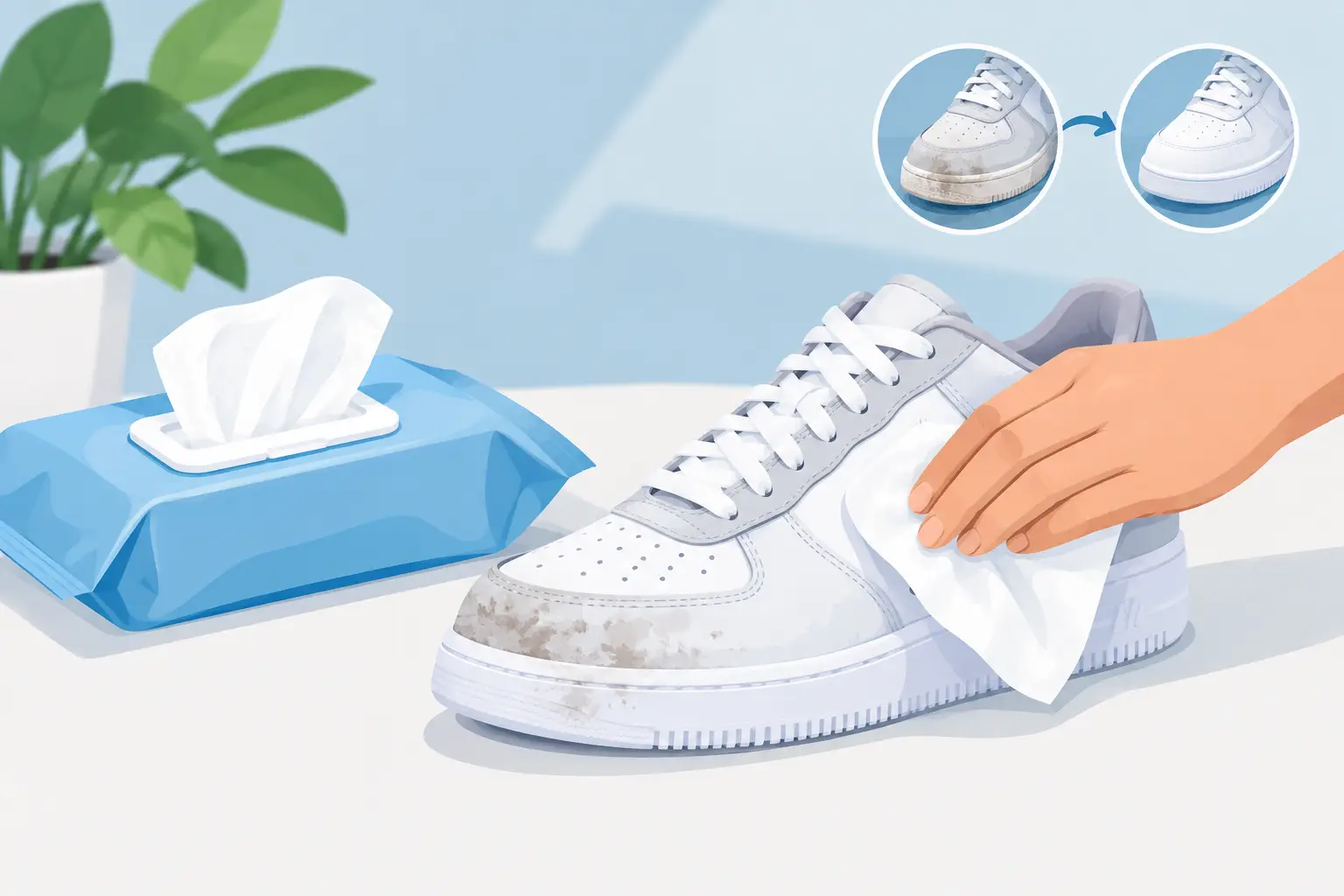
A fresh scuff on white midsoles right before you head out is exactly when a pack of wipes starts looking like sneaker care equipment. But can you use baby wipes to clean sneakers? Yes, for a quick surface refresh on the right materials. They are not a full cleaning solution, though, and the wrong wipe can leave residue, spread grime, or cause trouble on delicate kicks.
Baby wipes are made for skin, not footwear. That does not make them useless. It simply means you need to know where they fit in your sneaker-care routine and where a purpose-made cleaner does the better job.
Baby wipes can be safe for smooth leather, rubber midsoles, and lightly soiled canvas when you use them gently and do not soak the shoe. They are most useful immediately after wear, when dirt is still sitting on the surface rather than packed into stitching, mesh, or textured rubber.
The best option is an unscented, alcohol-free wipe with no bleach, exfoliating texture, or heavy lotion. Fragranced wipes may leave a film behind, while alcohol can dry certain finishes and weaken the look of coated leather over time. A wipe that feels extra moisturizing on skin can be too residue-heavy for a clean sneaker finish.
Think of baby wipes as first aid for your kicks. They can lift a small splash, dust off a midsole, or handle a fresh mark before it becomes stubborn. They cannot properly flush dirt from fabric, clean deep around seams, or restore sneakers that have picked up weeks of city dust.
On smooth leather uppers, a soft baby wipe can remove light dust, fingerprints, and small surface marks. Use light pressure and wipe in one direction instead of scrubbing back and forth. Once the surface is clean, go over it with a dry microfiber cloth so moisture and leftover ingredients do not sit on the material.
Rubber is another relatively safe zone. Baby wipes work well for a quick pass over white midsoles, toe bumpers, and outsole edges. They are especially handy when your sneaker is clean overall but the sidewall has picked up a few visible marks. If the rubber is heavily stained or yellowed, a wipe will not deliver the bright, even result you want.
Canvas can handle a carefully used wipe when the dirt is minor. Dab rather than rub, especially on colored pairs. Aggressive rubbing may push dirt deeper into the weave or create an uneven faded spot. Always let the area dry fully before deciding whether the mark is gone.
Synthetic materials are usually fine for quick wipe-downs, but finishes vary. Glossy panels, printed graphics, reflective details, and painted logos deserve extra caution. Test a hidden area first, such as the inside edge of the tongue or heel.
Suede and nubuck should stay far away from baby wipes. Water changes the texture of these materials, and the wipe can leave a dark patch or flatten the soft nap. A dry suede brush or a dedicated suede eraser is the smarter move for these pairs. If the stain is serious, do not experiment with a random wet wipe five minutes before wearing them.
Mesh is also more complicated than it looks. Wipes can remove top-layer dust, but they tend to push dirt into the tiny openings. Too much moisture can also leave tide marks as the material dries. For mesh runners and knit sneakers, a sneaker-safe cleaning solution, soft brush, and controlled amount of water will give you a cleaner result.
Avoid wipes on untreated natural leather, satin, silk, velvet, and specialty collaborations with delicate finishes. Premium kicks often mix materials in one upper, which means a method that is fine for the leather quarter panel may ruin the suede overlay beside it. Read the shoe before you clean it.
Start by knocking off loose dirt with a dry brush or microfiber cloth. This matters because wiping grit across an upper can create tiny scratches, particularly on smooth leather and glossy synthetic panels.
Next, squeeze the wipe lightly if it is dripping wet. You want it damp, not saturated. Work on one small section at a time, using gentle strokes. Do not press hard in an attempt to force a stain out. Pressure, not just moisture, is what can damage a finish.
For midsoles, fold the wipe to a clean section as it picks up dirt. A dirty wipe can transfer gray streaks right back onto white rubber. If a mark is still there after a few gentle passes, stop. That is your sign to move to a dedicated sneaker cleaner rather than escalating with more rubbing.
Finish by buffing the cleaned area with a dry, lint-free cloth. Then let the sneakers air-dry indoors, away from direct heat or sunlight. Do not wear them while they are still damp, and do not put them back in a closed shoe box until every part is dry.
The real difference is control. A sneaker cleaning solution is designed to lift grime without leaving behind skincare ingredients, perfume, or excess moisture. Paired with the right brush, it can reach textured rubber, stitching, lace holes, and fabric fibers that a wipe cannot clean properly.
A dedicated cleaner is also the better choice when you want a consistent result across the whole pair. Spot-cleaning one bright white area with a baby wipe can make the rest of the shoe look dull by comparison. A full clean keeps color and finish more even, which matters when your kicks are part of a carefully built rotation.
For sneakerheads who wear their pairs often, wipes are best kept in the car, travel bag, or office drawer for quick touch-ups. A proper cleaning kit belongs at home for post-wear maintenance, deeper cleaning sessions, and getting a pair ready for display. Sneakkool-style care is about keeping the entire sneaker looking sharp, not just hiding one mark near the toe.
The biggest mistake is using whatever wipe is nearby without checking the label. Disinfecting wipes, makeup-remover wipes, and bathroom-cleaning wipes are not substitutes for baby wipes or sneaker products. They can contain harsh ingredients that discolor materials, strip coatings, or leave a sticky finish.
Another mistake is treating a wipe like a magic eraser. Repeated hard scrubbing can dull leather, rough up canvas, and wear away paint on midsoles. If you find yourself rubbing the same spot for more than a few seconds, switch methods.
Finally, do not clean only the visible white sections. A clean midsole beside dusty laces and a grimy tongue looks unfinished. Remove the laces when the pair needs more than a quick refresh, clean them separately, and give the shoe time to dry before rebuilding the look.
A simple routine keeps cleaning easy. After each wear, brush off loose dust and wipe minor marks before they settle. Every few wears, use a sneaker-safe cleaner for the upper, midsole, laces, and outsole edges. For pairs you do not wear often, clean them before storage and keep them in a dry, dust-free space where the shape stays protected.
That routine is especially useful for white sneakers, light suede-free pairs, and everyday runners that see regular pavement time. You spend less time battling old stains, and your collection stays presentation-ready whether it is on your feet, packed for a trip, or lined up on display.
Baby wipes can save a clean look in the moment. Just give your favorite pairs the care they deserve when you get home – a little attention after wear is far easier than trying to rescue a neglected sneaker later.
No account yet?
Create an Account